
Download FireBird – Open-Source Database Management, SQL Compliance, Multi-Platform Support
Overview
FireBird is a powerful, open-source database management system that originated as a fork of InterBase version 6. Designed with robustness and portability in mind, it adheres closely to ANSI SQL standards, ensuring compatibility and consistency across diverse development environments. The software is built to support a wide range of use cases, from small-scale applications to enterprise-level data management systems. Its primary purpose is to provide developers and organizations with a reliable, secure, and scalable database solution that operates efficiently across multiple platforms.
FireBird addresses common challenges in database management, including cross-platform compatibility, transaction integrity, and fine-grained access control. It is particularly well-suited for teams working in heterogeneous IT environments where deployment spans Windows, Mac, and Linux systems. The system’s client/server architecture, based on TCP/IP, enables seamless communication between database servers and client applications, supporting both local and remote operations.
Target users include software developers, system administrators, and IT teams managing data-intensive applications. Real-world applications include CRM systems, inventory management, and backend services for web and mobile applications. FireBird’s commitment to open-source principles and long-term stability makes it a valuable tool in the broader software ecosystem, offering a viable alternative to proprietary database solutions without compromising on performance or security.
Key Features & Functionality
FireBird delivers a suite of advanced features tailored for modern database management needs. Its multi-platform support allows deployment across Windows, Mac, and Linux, enabling teams to maintain consistent database operations regardless of the underlying operating system. This flexibility is crucial for organizations with mixed IT infrastructures or remote development teams.
- Client/Server Architecture: Built on TCP/IP, FireBird’s architecture supports scalable, distributed database operations. This enables multiple clients to connect simultaneously, making it ideal for applications requiring high availability and remote access.
- Transaction Support: The system ensures data consistency through full transaction handling, allowing multiple operations to be grouped and committed or rolled back as a single unit. This prevents partial updates and maintains database integrity during complex workflows.
- User and Role-Based Security: Administrators can define granular permissions through user accounts and roles, controlling access to tables, views, and stored procedures. This layer of security helps protect sensitive data from unauthorized access and supports compliance with data governance policies.
- Two Server Types: FireBird offers both Classic and Super Server modes. The Classic Server is optimized for single-user or low-concurrency environments, while the Super Server uses multi-threading to handle multiple connections efficiently, improving performance in high-traffic applications.
- ANSI SQL Compliance: By closely following ANSI SQL standards, FireBird ensures that queries and scripts remain portable across different database platforms, reducing migration effort and enhancing developer productivity.
These features make FireBird a practical choice for developers building scalable applications, managing backend data for web services, or maintaining secure, long-term database systems.
Interface, UX & Performance
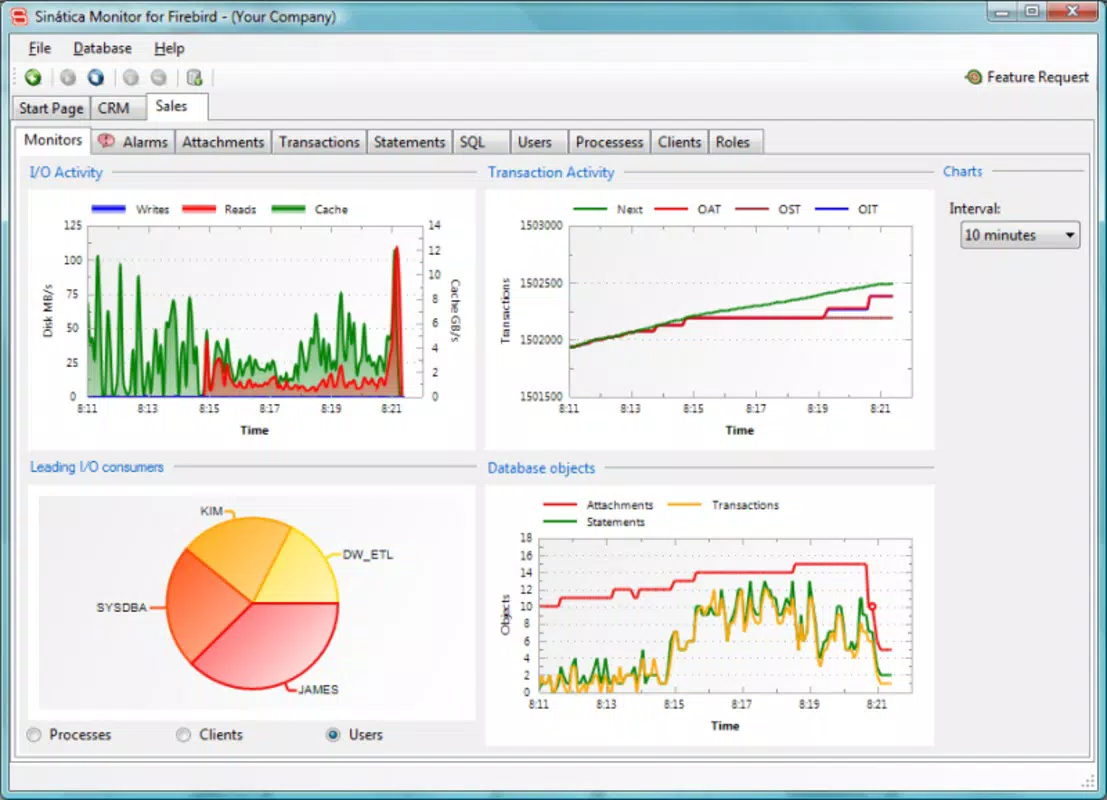
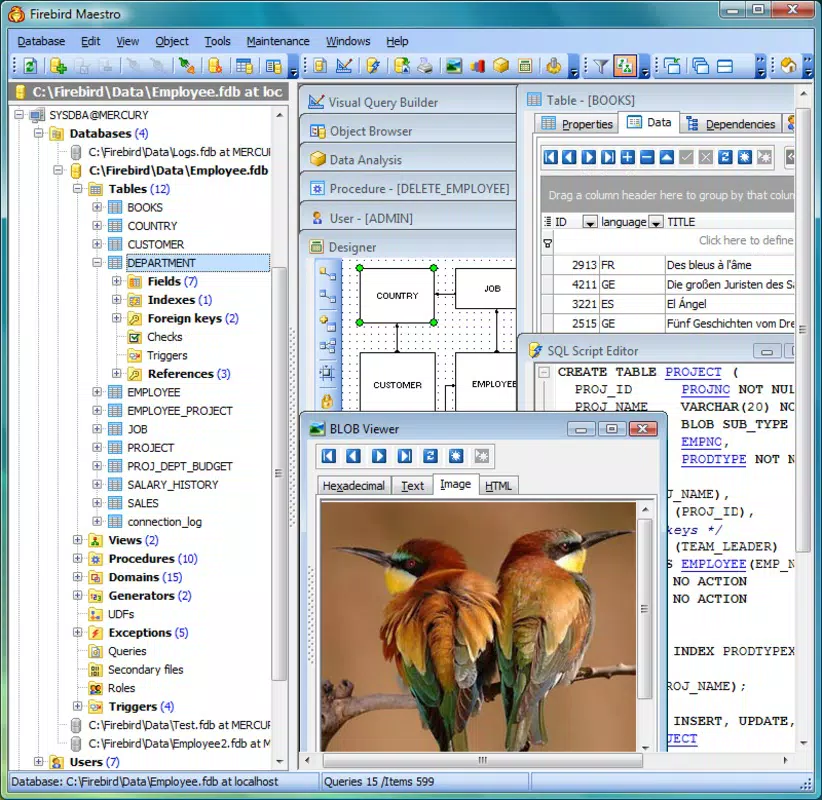
FireBird does not include a built-in graphical user interface (GUI) as part of its core distribution. Instead, it relies on external tools for database administration and interaction. This design choice reflects its focus on backend reliability and performance rather than user-facing visuals. As a result, users typically access FireBird through dedicated database management tools or command-line interfaces, which are available from third-party developers.
The user experience is therefore dependent on the chosen client tool. When paired with a modern GUI client, FireBird offers a responsive and intuitive workflow for schema design, query execution, and data management. Navigation is structured around standard database operations—tables, queries, users, and security settings—ensuring consistency with industry norms.
Although the developer did not list formal performance metrics, the architecture supports efficient operation across a range of device categories. The client/server model enables optimized data handling, especially in networked environments. Stability is maintained through robust transaction logging and crash recovery mechanisms, which help preserve data integrity even under unexpected shutdowns.
Responsiveness is generally strong in typical use cases, particularly when the Super Server mode is employed for multi-user access. However, performance may vary depending on the client tool used and the complexity of queries executed.
Platform Compatibility & Technical Requirements
FireBird is designed to operate on multiple operating systems, including Windows, Mac, and Linux. This broad compatibility allows developers and IT teams to deploy the database server in diverse environments without platform-specific limitations. The software is available for both desktop and server-grade systems, supporting a wide range of hardware configurations.
The latest version of FireBird was released on July 16, 2025. The file size for the distribution package is not specified in the provided information. Specific requirements for installation, such as minimum RAM, processor type, or disk space, were not listed by the developer.
The application is available for both Android and iOS platforms, though detailed compatibility information was not fully disclosed. Users should ensure their devices meet the necessary system requirements for the respective app store versions.
Pros and Cons
Pros
- Open-source and free to use, reducing licensing costs.
- Strong adherence to ANSI SQL standards for better portability.
- Supports multiple operating systems, including Windows, Mac, and Linux.
- Robust transaction handling ensures data consistency.
- Flexible server modes (Classic and Super) for varied deployment needs.
- Comprehensive user and role-based security features.
Cons
- No built-in GUI; requires third-party tools for database management.
- Performance may depend heavily on the selected client application.
- Technical setup may be challenging for non-developers.
- Specific system requirements were not disclosed.
- Updates and support rely on community contributions.
FAQ
Is FireBird available for Android and iOS?
Yes, FireBird is available for both Android and iOS platforms. However, specific compatibility details were not fully disclosed by the developer.
Is FireBird free to download and use?
Yes, FireBird is open-source and free to download, install, and use for personal and commercial purposes.
Can I use FireBird with my existing SQL-based applications?
Yes, FireBird adheres closely to ANSI SQL standards, making it compatible with many existing SQL-based applications and scripts.
Does FireBird support remote database connections?
Yes, FireBird uses a client/server architecture based on TCP/IP, enabling secure remote access to databases from client applications.
Is FireBird secure for enterprise-level data management?
Yes, FireBird includes user and role-based security features, transaction support, and data integrity mechanisms that make it suitable for enterprise environments.
Final Thoughts
FireBird stands out as a reliable, open-source database management system with strong cross-platform support and adherence to industry standards. Its ability to function across Windows, Mac, and Linux makes it a versatile choice for developers and IT teams managing complex data systems. While it lacks a built-in GUI, its integration with third-party tools ensures a powerful and flexible user experience.
Organizations seeking a secure, scalable, and cost-effective database solution will find FireBird particularly valuable. It is ideal for developers building applications that require robust transaction handling, secure access control, and long-term data integrity.
With its open-source foundation and active community, FireBird continues to evolve as a dependable tool in the modern software landscape. For teams prioritizing performance, portability, and security, this database system offers significant advantages.
Download FireBird now


